MOSAAIC (Multiethnic Observational Study in American Asian and Pacific Islander Communities) is run by a team of health researchers. They focus on the health risks and protective factors of heart, lung, and metabolic health among our communities.
This study started in January 2025 in five US cities and regions (Honolulu, San Francisco Bay Area, Chicago, New York, and Philadelphia).
In This Issue
- Study updates
- A word from Dr. Alka Kanaya, MOSAAIC steering committee chair
- Participant story - "Ten Thousand Stories, One Hope"
- Study location contact information
Study Updates
As of December 3, 2025, we have 1,484 participants in the MOSAAIC study. We are still early in the process, but every person who joins helps us learn more about the health experiences of Asian American, Native Hawaiian, and Pacific Islander communities. The information you share, such as your health history, lifestyle, and test results, helps researchers find patterns and understand what keeps our communities healthy. Over time, these findings can help doctors, public health programs, and policymakers create care and resources that truly support our communities.
A Word from Alka Kanaya, MD, MOSAAIC Steering Committee Chair
Dear MOSAAIC participants:
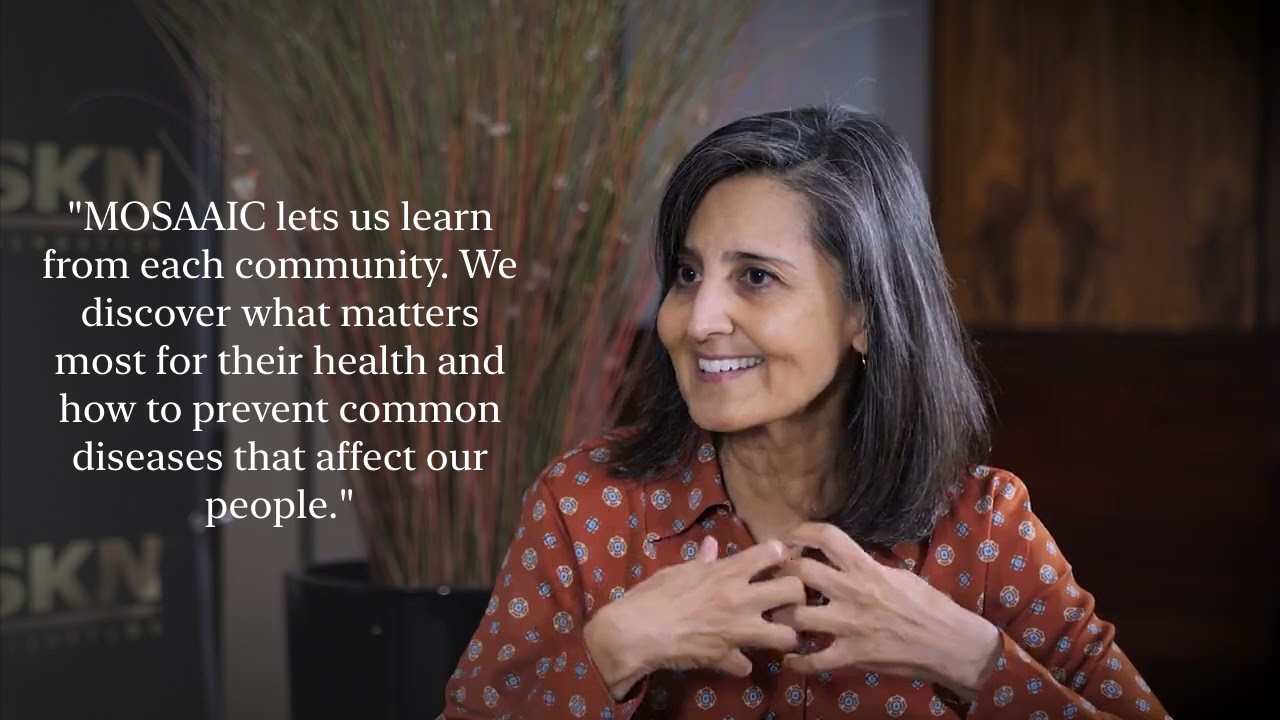
Thank you so much for joining our study! Your participation helps us understand the health of Asian American, Native Hawaiian, and Pacific Islander communities better. Our communities have been left out of most of the prior health research in the United States. In 2021, we brought together a team of scientists from across the country. They have experience working with different Asian American, Native Hawaiian, and Pacific Islander communities. These people helped to create the roadmap to guide us on this journey for MOSAAIC. MOSAAIC lets us learn from each community. We discover what matters most for their health and how to prevent common diseases that affect our people. Our MOSAAIC team is excited to learn with you. We want to find ways to boost health and quality of life in our communities.
Ten Thousand Stories, One Hope
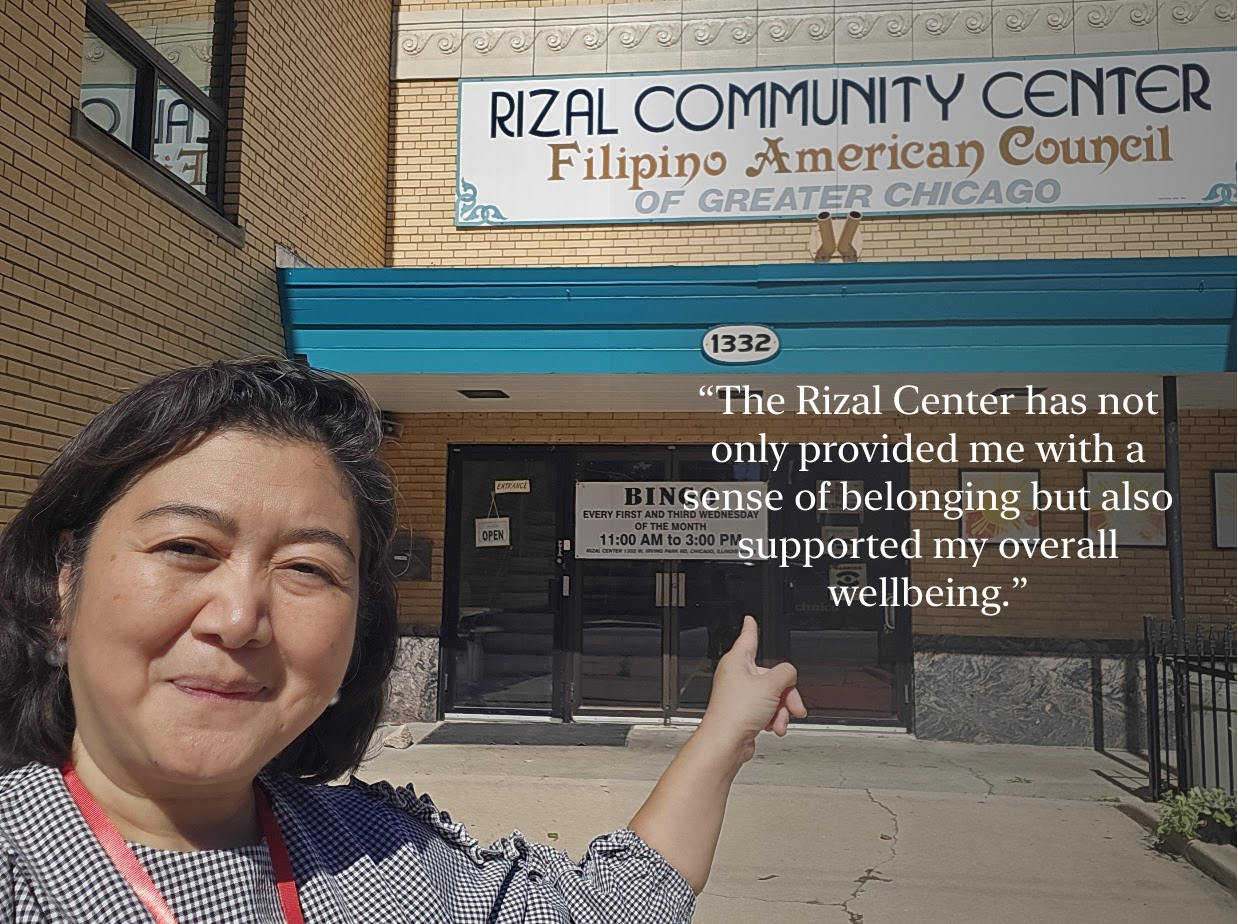
Ginger Leopoldo, a Filipina American, Finds Her Home Away from Home in the Rizal Center
MOSAAIC has a clinic in Rizal Center, which is near Chicago Uptown, the neighborhood where Ginger grew up.
By Sam Chao, MOSAAIC Community Outreach and Engagement Specialist. For Full Interview, please visit: Ginger Leopoldo, Full MOSAAIC Interview
Have you always been interested in your culture?
In fifth grade during the 80s, I came across descriptions of Filipinos in my textbooks. They were biased and inaccurate, which made me feel uncomfortable being stereotyped. When I was introduced to cultural activism through a community arts organization called Kutura, I became proud of my cultural identity because I was surrounded by those who looked like me and shared a common heritage. Now, I serve as the executive director of the Center for Immigrant Resources and Community arts (CIRCA Pintig). I feel that having these kinds of cultural spaces is very important for our community's wellbeing and sense of belonging.
How did you hear about this study? How did it make you feel?
I heard about MOSAAIC through my organization CIRCA Pintig and the Rizal Community Center. I felt really excited when I learned about MOSAAIC. It centers on individual communities. Filipinos are a minority of a minority. Even though many of us work in healthcare, we often get so busy caring for others that we forget to take care of ourselves.
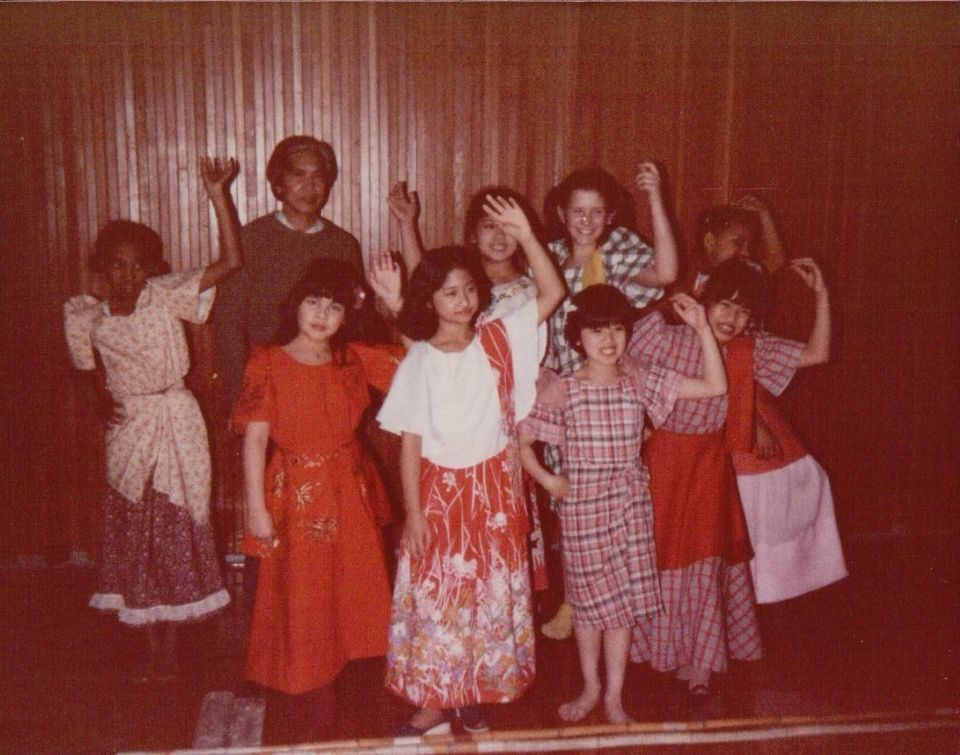
Ginger's bilingual teacher taught them Filipino Folk Dances in elementary school in the Uptown neighborhood of Chicago
Don't have time to read? Here is a 30 second highlight of Ginger's participant interview:


Could you share your experience of being in the MOSAAIC Study?
My experience has been pleasant! The surveys remind me to be more on top of my health, my eating and lifestyle habits. It gives you a snapshot of your health results. For people without regular healthcare, lab work can reveal important findings. This helps them get early intervention if needed.
Is there anything you want to say to those who have not joined?
Joining the study may take some time, but more participation means better findings. This will lead to greater impact for us in the future.
Study Location Contact Information
Please follow us on Instagram and Facebook!



University of Chicago:
(773) 702-9644 | mosaaic@bsd.uchicago.edu
Penn State University:
(312) 880-7974 | mosaaic@pennstatehealth.psu.edu

Stanford University:
(650) 724-3327 | mosaaicstudy@stanford.edu
General:
mosaaicstudy@nyulangone.org
English: Zelle Halloran
(646) 501-3673 | zelle.halloran@nyulangone.org
Korean: Hanah Hwang
(646) 501-3396 | hanah.hwang@nyulangone.org
Chinese: Yuxi Duan
(646) 501-3634 | yuxi.duan@nyulangone.org
English and Chinese: Minzi Li
(267) 400-5006 | minzi.li@fccc.edu
Chinese: Yushi Pan:
(215) 980-3958 | yushi.pan@temple.edu
Vietnamese: Phuong Do:
(267) 777-2520 | phuong.do@temple.edu
Filipino: Yushi Pan:
(215) 980-3958 | yushi.pan@temple.edu
University of Hawaiʻi:
(808) 376-9099 | ponohls@hawaii.edu